
Before the pizzaiolo I trained under let me top anything else, I made margheritas. Only margheritas, for weeks — because, as he put it, “the margherita has four ingredients and four hundred ways to fail, and every other pizza is a margherita wearing a costume.” He’d taste one of mine off the peel, say a single word — usually “again” — and eventually, one Tuesday, he said nothing at all and just ate the whole thing standing at the bench. I’ve cooked fancier food since. I’ve never been prouder of a plate.
Tomato, fior di latte, basil, olive oil. The margherita classica is the most famous dish in Italy and the most quietly demanding thing you can make at home, because there’s no fifth ingredient to blame. And the single biggest mistake Australians make with it happens before the oven is even on: they cook the sauce.
What a margherita classica actually is
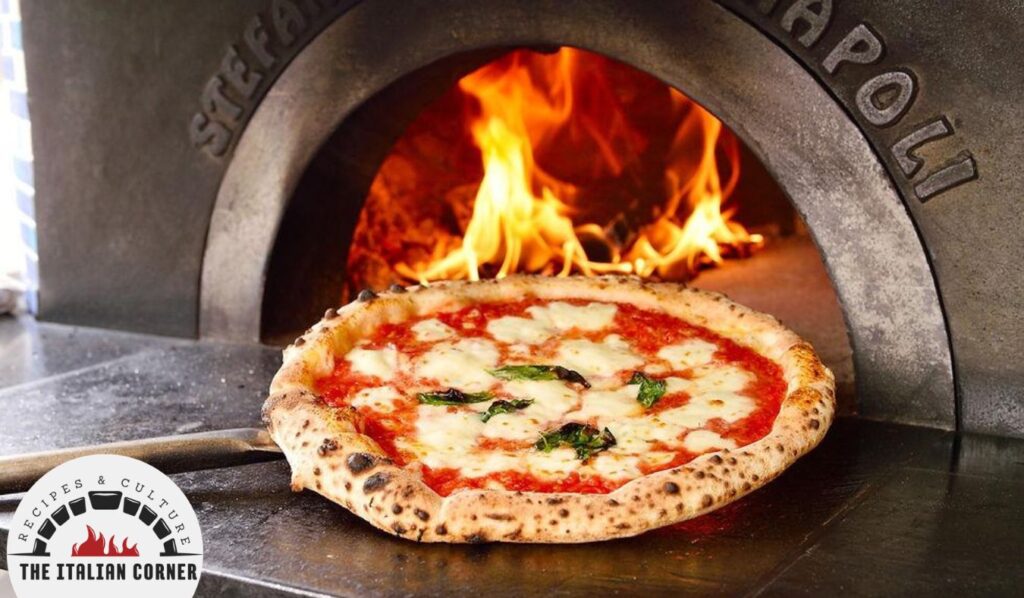
Naples, 1889, the queen, the tricolore — you know the story, and the Neapolitans have since written the real version into law: the Associazione Verace Pizza Napoletana literally certifies what may call itself a true margherita. Crushed raw tomato. Fresh mozzarella — fior di latte or buffalo. Basil. Olive oil. A blistered, puffy, tender crust. Nothing else — and just as important, not much of any of it. A proper margherita is sparse in a way that shocks people raised on Australian pub pizzas: patches of red showing through the cheese, a handful of basil leaves, a crust you can fold. The restraint isn’t stinginess. It’s the whole design — every element gets to taste like itself.
Position one, plainly: less cheese than feels right. Two balls of fior di latte across two pizzas, torn and drained (the full draining sermon is in the garlic pizza post — same rule, same reason: fior di latte is delicious water in a bag until you deal with it). Pools of white with borders of red, never a solid blanket. Position two: no oregano, no garlic, no parmesan shower. Those make other pizzas — good ones — but the moment they land, it’s not a margherita classica anymore, and this article is about the real thing.
The technique: the sauce is raw, and the oven is the cook
Here’s what’s actually happening with tomato on a pizza, because this is where I went wrong for years at home and where nearly every Australian version goes wrong with me.
A pizza sauce gets cooked once, ferociously, in the oven — a hot, fast blast that concentrates the tomato, caramelises its edges and drives off just enough water. If you simmer a rich sauce on the stove first, the way you would for the spaghetti pomodoro on this site, the oven then cooks it a second time, and twice-cooked tomato turns dark, jammy and heavy — pasta sauce sunbaking on bread. The fresh, bright, acidic tomato flavour that defines a margherita is precisely the flavour of tomato that has been cooked exactly once.
So the sauce, in its entirety: tinned whole peeled tomatoes, crushed by hand, with salt. That’s it. Not blended smooth — a food processor whips in air and shears the seeds bitter; hands leave it pulpy and uneven, which is correct. No oil in the sauce (it goes on top), no sugar, no simmering, no garlic. Ninety seconds of work. As a home cook I couldn’t believe this was allowed. It’s not just allowed — it’s the law, per Naples.
Which leaves the tomatoes themselves carrying everything, so buy well: San Marzano tins if your deli or the Italian aisle has them (Mutti and Annalisa both sell excellent Australians-can-actually-find-them options), and taste your crushed sauce before it goes anywhere near dough. It should taste like a great tomato with salt. If it tastes tinny, another pinch of salt usually settles it; if it tastes thin, strain off some liquid rather than cooking it down.
And the basil question, answered by physics rather than opinion: in Naples’ 450-degree ovens, pizzas bake in 90 seconds and the basil goes on before — it perfumes the cheese and survives. Your home oven bakes for 8–10 minutes, and basil in there for 8 minutes is a cremation. So at home: a few leaves under the cheese before baking (protected, they steam their perfume into everything) and the rest scattered fresh after. Both traditions honoured, nothing burnt.
Margherita classica
Makes 2 pizzas
Dough — same overnight dough as the garlic pizza, repeated here so you’re not tab-hopping with floury hands
- 400 g bakers flour
- 260 ml lukewarm water
- ¼ tsp instant dried yeast
- 8 g fine salt
Topping
- 1 × 400 g tin whole peeled tomatoes (San Marzano if you can, Mutti polpa as the honest fallback), drained of about half their liquid
- Fine salt
- 2 balls fior di latte (about 220 g), torn and drained on paper towel for an hour — from the Woolies/Coles deli tubs or an Italian grocer; buffalo mozzarella if you’re celebrating something
- A big handful of basil leaves
- Your best olive oil
Method
- Dough, the night before: mix, knead 5 minutes, cover, 2 hours on the bench, fridge overnight. Two hours before baking, divide into 2 balls and let them warm, covered, on the bench.
- Oven to its absolute maximum — 250°C+ — with a pizza stone, steel, or upturned heavy tray inside for a full 30 minutes. An under-heated surface is a pale, soggy margherita; there is no shortcut through this half hour.
- The sauce: tip the drained tomatoes into a bowl and crush them with your hand until pulpy with some texture left. Salt. Taste. Stop. If you feel the urge to add something, go and stand somewhere else until it passes.
- Stretch the first ball from the centre outward with fingertips, leaving the rim untouched — about 30 cm, thin enough in the middle to see light through if you lifted it. Onto floured baking paper.
- Dress it sparse: 3–4 tablespoons of sauce spread with the back of the spoon in a spiral, stopping well short of the rim — the dough should show through in streaks. Three or four basil leaves onto the sauce. The fior di latte in scattered pieces, gaps everywhere. A thin thread of olive oil.
- Slide it, paper and all, onto the raging-hot surface. Bake 7–10 minutes, until the rim has puffed and leoparded with dark blisters, the cheese has melted into glossy white pools with the odd bronzed edge, and the sauce at the borders has gone from wet to just-caramelised.
- Out of the oven: the rest of the basil torn over, another confident thread of your best oil, cut and eat immediately — folded in half like a Neapolitan if the slice flops, which, if you’ve stretched it properly, it will. The flop is a feature. It’s called the fold for a reason.
Chef’s notes — the honest bits
If the centre came out soggy: too much sauce, undrained cheese, or a surface that wasn’t hot enough. In my experience teaching this to friends, it’s the sauce quantity 8 times out of 10 — everyone dresses their first margherita like a pub pizza. Sparse. Sparser than that.
If the flavour’s flat, the fault is in the tin, not your technique — this pizza is a tomato with a stage. Trade up one brand and the whole dish changes. It’s a $2 difference for the lead actor.
One pizza at a time. Two trays in a home oven halves the temperature and doubles the disappointment. Pizzas leave the kitchen one by one in Naples too; pour the eaters a drink and make a show of it.
Leftover crushed sauce keeps three days in the fridge and is the world’s fastest bruschetta topping — spoon it on charred bread with oil and salt. The four-ingredient logic keeps paying.
The upgrade path: once your margherita is landing, buffalo mozzarella (drained even more ruthlessly — it’s wetter) is the celebratory version, and a pizza steel is the single best sub-$100 purchase in home pizza. In that order. Cheese first, steel second, backyard pizza oven only when the obsession has fully taken hold — and by then you won’t be asking me.
Four ingredients, four hundred ways to fail, one raw sauce and one screaming oven. Make it until someone eats the whole thing standing at the bench and says nothing. That’s the certification that matters.