
Ten years on the line and the dish that taught me the most cost less than a schooner. Spaghetti. My first head chef made every new cook — every single one — plate him spaghetti al pomodoro before they touched anything else. Four ingredients, nowhere to hide. I failed it twice. The pasta was cooked, the sauce was fine, and the plate was still wrong, because nobody had ever told me the two of them are supposed to become one thing in the pan, not meet for the first time in the bowl.
That’s the gap between home spaghetti and restaurant spaghetti. Not the ingredients. The last ninety seconds.
What spaghetti actually is (and what it isn’t)
Spaghetti is a long, thin extrusion of durum wheat semolina and water. That’s it — no egg, which surprises people. The thinness is the point: enormous surface area, quick cooking, and a shape built for sauces that cling and coat rather than sit in chunks. Pomodoro, aglio e olio, carbonara, cacio e pepe — the great spaghetti dishes are all glossy, emulsified sauces for exactly this reason.
Which brings me to the opinion I’ll defend at any barbecue: bolognese doesn’t belong on spaghetti. The meat slides off the strands and pools at the bottom of the bowl; the Italians put ragù on tagliatelle for a reason. Cook your bolognese — cook it well — and put it on something with grip. Spaghetti has better work to do.
The technique: why pasta water is the whole game
Here’s what’s actually happening in the pot. As spaghetti boils, it releases starch into the water. That cloudy water is liquid gold — starch is an emulsifier, the thing that lets oil and water hold hands instead of splitting. When you finish the pasta in the sauce with a splash of that water, tossing hard over heat, the starch binds the fat and liquid into a glaze that grips every strand.
Drain your pasta bone-dry into a colander, walk it across the kitchen, and dump sauce on top? You’ve thrown the emulsifier down the sink. That was me, for years, as a home cook. The professional fix costs nothing:
- Salt the water hard. About a tablespoon per litre — it should taste like the sea. This is your only chance to season the pasta itself.
- Pull the pasta two minutes early. It finishes cooking in the sauce, drinking in flavour as it goes.
- Keep a mug of pasta water. Set it on the bench before you drain. Every time, no exceptions.
- Never rinse. Rinsing strips the surface starch — the exact thing the sauce needs to cling to.
And leave the strands whole. Don’t snap them. Stand the spaghetti in the boiling water and it slumps in on its own inside ten seconds. Long strands are what let the sauce wind through a proper twirled forkful.
Buying it in Australia
Skip the fresh stuff in the fridge section — for these dishes, dried is correct, not a compromise. On the packet, look for durum wheat semolina and, if you can find it, bronze-cut (trafilata al bronzo). Bronze-cut spaghetti has a rough, matte surface you can see and feel; sauce grips it the way paint grips sanded timber. San Remo and Barilla from Coles or Woolies do the job for a weeknight. De Cecco, Rummo or Molisana from a deli or a decent IGA are worth the extra couple of dollars — the difference shows up on the fork, not just the label.
Spaghetti al pomodoro — the proving dish
The recipe my old chef used to sort cooks from pretenders. If your pomodoro comes out glossy, clinging and bright, you’ve got the technique for every spaghetti dish that matters.
Serves 4
- 400 g dried spaghetti
- 2 × 400 g tins whole peeled tomatoes (Mutti or Annalisa — both in the big supermarkets), crushed by hand
- 80 ml olive oil, plus a thread to finish
- 3 garlic cloves, peeled, crushed flat under a knife
- A handful of basil, torn
- Salt
- Grated Parmigiano Reggiano or Grana Padano, to serve
Method
- Warm the oil and garlic together in a wide, deep frypan over medium-low heat — starting them cold stops the garlic scorching. When the garlic is pale gold and the kitchen smells like an Italian nonna’s stairwell, about two minutes, you’re there. Brown garlic is bitter garlic; start again if it gets away from you.
- Add the crushed tomatoes and a solid pinch of salt. Simmer gently for 20 minutes, until the raw, tinny edge is gone and the sauce holds a trail when you drag a spoon through it.
- Boil the spaghetti in well-salted water for two minutes less than the packet says. Firm, chalky centre — it’s not done, and that’s correct.
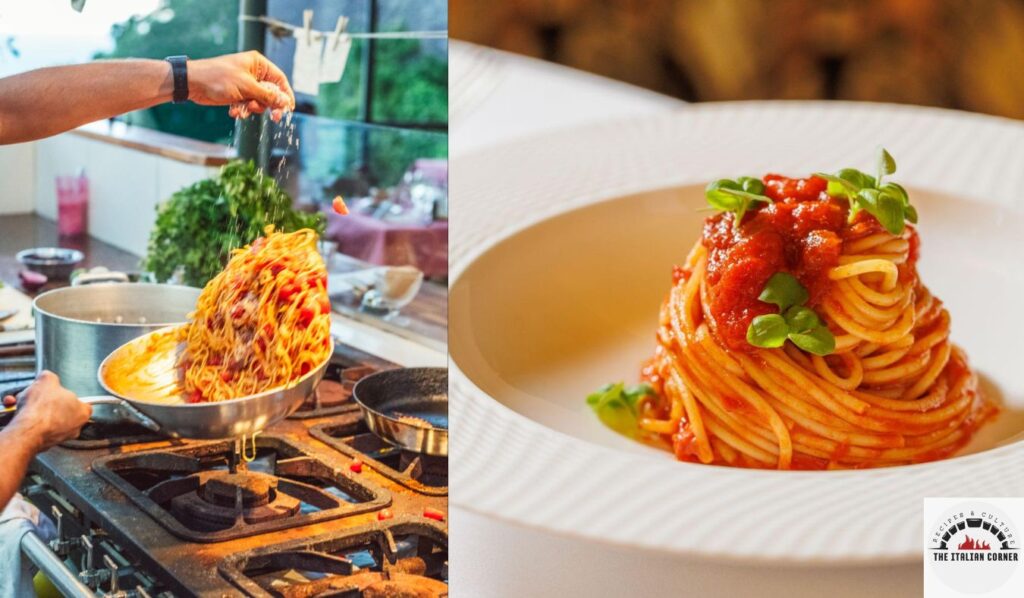
- Scoop out a mug of pasta water. Then lift the spaghetti straight into the simmering sauce with tongs, wet and dripping.
- The ninety seconds that matter: add a splash of pasta water and toss hard over medium heat. The sauce will loosen, then tighten into a shine that coats every strand. Too tight, add water; too loose, keep tossing. Done means glossy pasta and a nearly dry pan.
- Off the heat: basil, a thread of raw olive oil, twirl into warm bowls, cheese on top. Serve immediately — an emulsified sauce waits for nobody.
Chef’s notes — the honest bits
The toss will defeat you once or twice. Everyone’s first pan-finish is either soup or glue. Soup: keep it on the heat and keep moving, it tightens fast. Glue: splash of pasta water, toss again. The feel arrives around your third attempt and never leaves.
Tinned tomatoes beat fresh ten months of the year. Unless you’re holding February tomatoes from someone’s backyard, good Italian tins make the better sauce. Every professional kitchen I worked in used them. Zero shame.
100 g of dried spaghetti per person. 125 g if it’s the whole dinner. A 500 g packet is four serves, not two — measure it once and you’ll never believe your eyes again.
Reheating: pan with a splash of water, gently, and it revives. Microwave, and you get a rubber band sculpture. Your call.
Master this plate and carbonara, cacio e pepe and aglio e olio are the same ninety-second move with different fats. That’s where this series goes next.