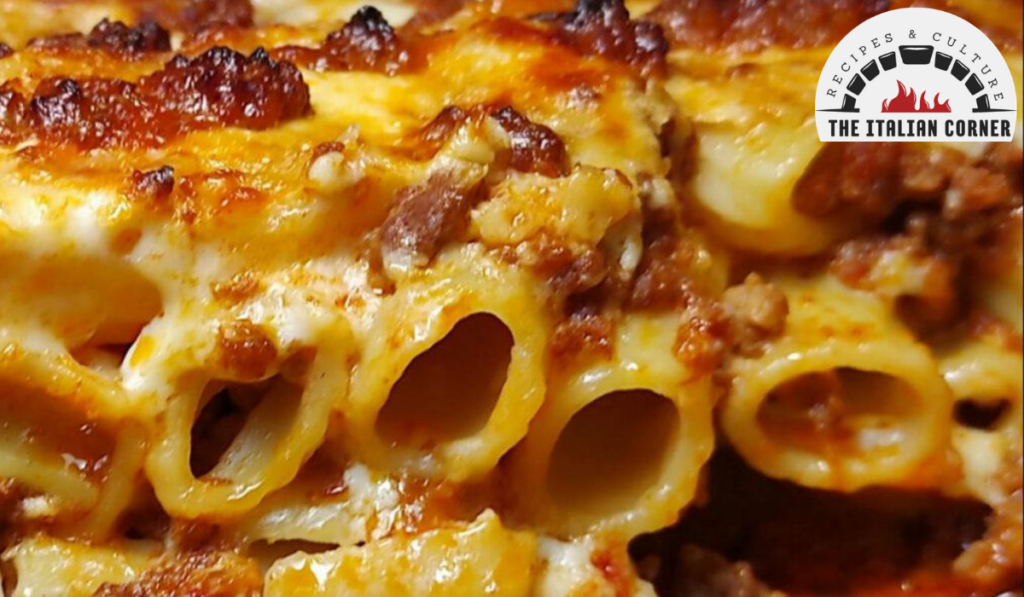

The best macaroni I ever ate was in a nonna’s kitchen in the hills outside our restaurant’s sister town — maccheroni al forno, baked until the top layer of pasta stuck up like broken tiles, every exposed edge shattering-crisp, everything underneath molten. The worst macaroni I ever ate, I made. I was fifteen, home alone, and it was a gluey brick of overcooked elbows welded together with a sauce that had split into grease and grit. Same pasta. The distance between those two dishes is exactly two techniques, and both fit on an index card.
Macaroni has an image problem in Australia. We’ve filed it under kids’ food and blue boxes and forgotten it’s the anglicised word for maccheroni — which, for centuries, was practically Italian for pasta itself. Time to give the elbows their dignity back.
What macaroni actually is
Maccheroni in Italy is a loose family of short, tubular dried pasta; what we buy in Australia as “macaroni” is the small curved elbow. And the elbow is a clever piece of engineering: a narrow tube that traps sauce inside, a curve that nests pieces together so every spoonful is pasta and sauce in equal measure, and a small size that suits a spoon as much as a fork. That’s why the whole world, from Naples to Napier, points macaroni at the same job — thick, clinging, dairy-and-tomato sauces, usually baked. It is the baking pasta. Long strands go stringy and sad in the oven; elbows hold their shape, hold their sauce, and give you that broken-tile crust on top.
So no apologies here: the proving dish for macaroni is macaroni cheese. Not the packet. The real thing, built the way an Italian kitchen builds a pasta al forno — and once you see it as an Italian baked pasta rather than a novelty, everything about making it well falls into place.
The technique: besciamella, and why your sauce splits
Here’s what’s actually happening inside a cheese sauce, because this is where my fifteen-year-old brick went wrong and where most home versions still do.
Cheese on its own is a fragile emulsion of fat, protein and water. Heat it hard and directly — melted cheese stirred into hot milk, or worse, into the pasta — and the proteins seize into grit while the fat runs free. That’s the split: grease slick on top, sandy curds below. The fix Italian and French kitchens have used for centuries is besciamella (béchamel): flour cooked briefly in butter, milk whisked in, simmered until it thickens. The flour’s starch does two jobs — it thickens the milk, and it physically gets between the cheese proteins and stops them clumping when the cheese melts in. A besciamella-based cheese sauce is nearly unbreakable. A “just melt cheese into things” sauce is a coin toss.
Two rules, stated plainly:
- Cheese goes in off the heat. Kill the flame, then stir the cheese into the hot besciamella. Residual heat melts it smoothly; direct heat is what curdles it. (Same principle as carbonara — the pan comes off before the fragile thing goes in.)
- Undercook the macaroni by a full three minutes. It’s going into the oven, where it keeps cooking in the sauce. Pasta boiled to “done” before baking comes out of the oven as mush. This is the single most common failure in every baked pasta, and the fix costs nothing.
Macaroni cheese, the chef’s way
An Italian-minded macaroni cheese: proper besciamella, real cheeses, mustard and nutmeg doing quiet work, crust worth fighting over. Feeds a family, reheats like a dream.
Serves 6
- 500 g macaroni (elbows — San Remo and Barilla both stock them at Woolies and Coles)
- 100 g butter
- 80 g plain flour
- 1.2 litres full-cream milk, warmed
- 250 g mature cheddar, grated — a proper vintage tasty, not the mild block; this dish runs on the cheese’s attitude
- 100 g gruyère from the deli counter, grated (or more vintage tasty — honest substitution, slightly less depth)
- 40 g grated Parmigiano Reggiano or Grana Padano
- 1 tsp Dijon mustard
- A whole nutmeg, for grating
- Salt
- 40 g coarse breadcrumbs or panko, tossed in a little melted butter
Method
- Heat the oven to 200°C. Boil the macaroni in well-salted water for three minutes less than the packet says — it should be chalky in the middle and you should be slightly worried. Good. Drain it (keep a mug of the water) and tip it into your baking dish.
- The besciamella: melt the butter in a saucepan over medium heat, add the flour, and stir for two minutes until it smells like pastry and looks like wet sand — you’re cooking out the raw flour taste, not colouring it.
- Whisk in the warm milk in three additions, whisking each one smooth before the next. Then simmer gently, stirring, for five minutes, until it thickens enough to coat the back of the spoon and hold a line when you drag a finger through it.
- Off the heat: stir in the cheddar, gruyère and half the parmesan, the mustard, a generous grating of nutmeg and salt to taste. Taste it — it should be a little too intense on its own, because half a kilo of pasta is about to mute it.
- Pour the sauce over the macaroni and fold together. It should look too wet, almost soupy; the pasta drinks a shocking amount in the oven, and this is the difference between lush and claggy. Too tight already? Loosen it with a splash of the pasta water.
- Scatter the buttered crumbs and remaining parmesan over the top. Bake 25–30 minutes, until the edges bubble like lava at the rim of the dish and the top is the colour of good toast, with the odd elbow poking up dark and crisp.
- Now the hard part: rest it 10 minutes before serving. Straight from the oven it’s molten soup; ten minutes later it holds a proud spoonful. Every kitchen I worked in rested its baked pasta. Every home cook I know skips it. Don’t.
Chef’s notes — the honest bits
If the sauce splits anyway, you had it on the heat when the cheese went in, or the cheese was pre-grated with anti-caking starch that fought you. Grate your own from the block; it melts cleaner and costs less per kilo anyway.
The “too wet” rule took me years to trust. As a home cook I kept tightening the sauce because it looked wrong going into the oven, and kept carving dry bricks out of it at the table. Professional baked pasta goes in looking like a mistake and comes out right. Trust it once and you’ll never go back.
Make-ahead reality: assemble the whole dish, unbaked, up to a day ahead in the fridge — but add an extra splash of milk before baking (the pasta drinks overnight too) and give it ten more minutes in the oven from cold.
The tomato move: fold 200 g of leftover arrabbiata or pomodoro through the macaroni before the cheese sauce goes on, and you’ve built something close to that nonna’s maccheroni al forno. It’s the version I’d cook for another chef.
Elbows, besciamella, restraint at the boil, patience at the rest. Four things. That’s the whole distance between the brick and the broken tiles.