
The function that taught me cannoli was a fiftieth birthday, eighty guests, and my bright idea to fill all eighty shells in the afternoon lull so service would run smooth. By 9 pm we were serving beautiful, blistered, hand-fried shells with the texture of damp cardboard. The Sicilian waiter — older than the restaurant, seen everything — picked one up, bent it slowly in half without a sound, and looked at me the way you’d look at someone who’d left a puppy in a hot car. “A cannolo,” he said, “is born when you fill it. You killed these at four o’clock.”
He was right, and that sentence is the most important thing anyone will ever tell you about cannoli: the crunch is a deadline. Everything else — the dough, the frying, the ricotta — exists in service of a crisp shell meeting cold cream in the last minutes before the first bite.
What a cannolo actually is
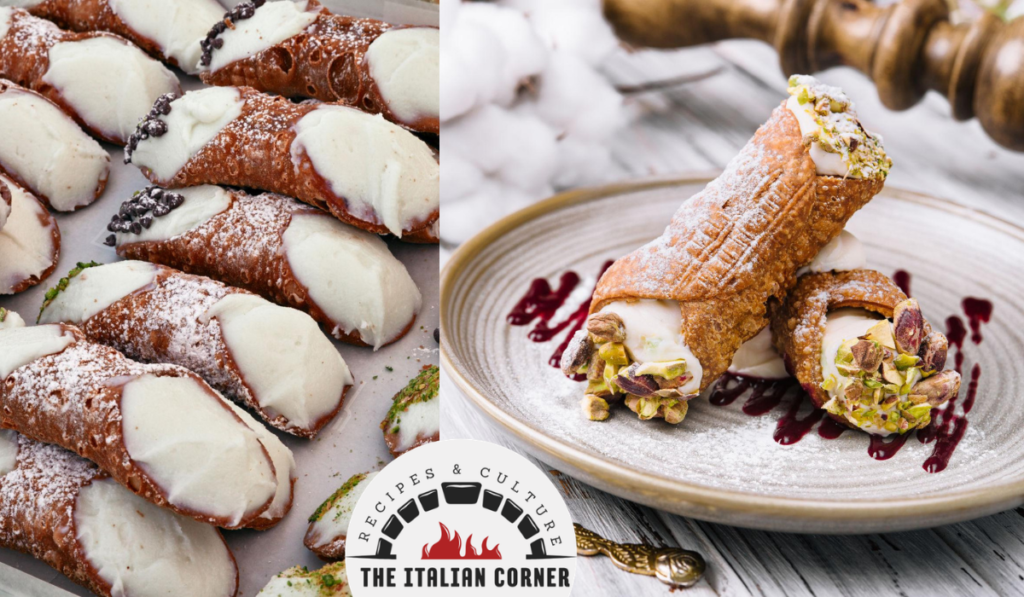
A tube of thin, blistered, deep-fried pastry — crisp like the top of crème brûlée, not hard like a biscuit — filled with sweetened ricotta and finished at the ends with pistachio, candied orange or chocolate. Sicilian to the bone, born for Carnevale and adopted by every Italian deli counter on earth, including the great ones scattered through Melbourne and Sydney’s Italian strips, where you can watch the only correct method in action: shells in a tower, ricotta in a piping bag, and nothing united until money changes hands. That’s not showmanship. That’s engineering.
And the position, stated plainly: the filling is ricotta. Not custard, not chantilly cream, not the yellow crème pât of the sad prefilled supermarket dozen. Ricotta — grainy-sweet, milky, barely sugared — is what makes a cannolo taste like Sicily instead of like a profiterole in a tube.
The technique: a war on two fronts — blisters and moisture
Here’s what’s actually happening in a great shell and a great filling, because they’re separate battles.
The blisters are the shell. Those bubbled, glassy domes all over a proper cannolo aren’t decoration — they’re the crispness itself, hundreds of paper-thin pockets that shatter instead of crunching flat. They come from three things working together: wine and vinegar in the dough (the acid weakens the gluten so the pastry can bubble instead of resisting, and the alcohol evaporates violently in hot oil, inflating the blisters), rolling the dough to translucence — 1 mm, thin enough to read the bench through, because thick dough fries into armour — and oil at 180°C, hot enough to blast the surface into bubbles before the pastry sets. Cooler oil gives you pale, greasy, blister-less tubes. I know because my first solo batch came out looking like cardboard cigars, and the pastry chef made me tape the thermometer to the pot handle.
The moisture war you already know if you’ve read the ravioli post: ricotta is full of whey, whey is water, and water is the assassin of everything crisp. The filling gets made from ricotta drained overnight — properly, in a sieve over a bowl in the fridge — until it’s thick enough to stand a spoon in. And then, the deadline: even perfectly drained ricotta will soften a shell from the inside in under an hour. So you fill when you serve. Not before dinner. Not “just to get ahead.” At the table, with a piping bag, like the deli does. It takes eight seconds per cannolo and it is the entire dish.
Cannoli
Shells and filling, both make-ahead — the assembly is the only à-la-minute step, and that’s the point.
Makes about 20
Shells
- 250 g plain flour
- 25 g caster sugar
- 1 tbsp cocoa (colour and depth, not chocolate flavour — traditional in much of Sicily)
- ½ tsp fine salt
- 30 g cold butter (lard is the old way and fries crispier if your deli has it; butter is the honest home call)
- 60 ml dry Marsala (bottle shop, fortified shelf — and now you own Marsala for the tiramisu too)
- 1 tbsp white wine vinegar
- 1 egg, separated — yolk in the dough, white for sealing
- Vegetable or canola oil, for deep frying
- Cannoli tubes — stainless steel, about $15 for a set at kitchen shops, Italian grocers or online; there is no workaround worth your time
Filling and finishing
- 750 g full-fat ricotta — firm deli-counter ricotta cut from the wheel if possible, drained overnight regardless
- 120 g icing sugar, sifted
- 1 tsp finely grated orange zest
- 60 g dark chocolate, chopped small, or candied orange, or both
- Crushed pistachios, for the ends
- Icing sugar, for dusting
Method
- The night before: set the ricotta in a fine sieve over a bowl, cover, refrigerate. In the morning it should be dense and matte. Pour off the whey with respect; it did you a favour by leaving.
- Shells: rub the butter into the flour, sugar, cocoa and salt. Add the Marsala, vinegar and egg yolk and bring together into a firm dough — it should feel tighter and drier than pasta dough. Knead 5 minutes until smooth, wrap, and rest 1 hour minimum. The rest matters double here: this dough gets rolled to 1 mm, and unrested dough will fight you the whole way and spring back on the tubes.
- Roll a quarter at a time — pasta machine to its second-thinnest setting, or a rolling pin, ambition, and patience — until you can see your hand through it. Cut 10–11 cm circles.
- Wrap each circle around a tube, sealing the overlapping edge with a dab of egg white and a firm press. Do not glue the pastry to the tube itself, or you’ll be excavating shells later.
- Fry at 180°C — thermometer taped to the pot, or a cube of bread browning in 15 seconds — two or three at a time, 1–2 minutes, turning once, until deeply golden and covered in blisters. Drain on a rack, and slide the tubes out with tongs while still warm; cold shells grip.
- Filling: beat the drained ricotta with the icing sugar and zest until smooth — a minute by hand, and stop there; ricotta doesn’t split like mascarpone, but overbeating loosens it. Fold in the chocolate. Into a piping bag, into the fridge.
- The eight seconds that matter, done at serving time: pipe from both ends to the middle so there’s no hollow heart, press crushed pistachio onto each exposed end, dust with icing sugar, hand it over. Watch their face at the first bite. That shatter is why you fried twenty tubes on a Saturday.
Chef’s notes — the honest bits
The unfilled shells keep two weeks in an airtight container, and the filling keeps three days in the fridge. Read that again: cannoli are one of the great make-ahead desserts precisely because you’re forbidden from assembling them early. The deadline isn’t a burden. It’s the design.
Buying the shells is legitimate. Every Italian grocer sells trays of good fried shells, and homemade-filling-in-bought-shells beats bought-everything by a mile. It’s the version to start with, and I’d rather you piped drained sweet ricotta into a purchased shell this weekend than laminated this recipe for someday. The full homemade shell is the graduation, not the entry fee.
If your shells came out smooth and hard instead of blistered: dough too thick, or oil too cool. Nearly always the dough. Thinner than feels reasonable, then thinner again.
Cow’s milk ricotta is our reality — Sicily uses sheep’s ricotta, richer and tangier, and if a specialty deli near you stocks it, buy it and don’t look at the price. Drained cow’s ricotta with a little extra zest is the honest Australian version, and it’s a good one.
The pre-filled cannoli in the plastic clamshell at the shops has been dead since Tuesday. You know too much now. Walk past.
Crisp is a deadline, moisture is the enemy, and the piping bag comes out last. Sicily’s been shouting this from behind the deli counter all along — we just had to fill eighty shells at four o’clock to hear it.