
The chef who taught me gnocchi weighed nothing and terrified everyone. Her test was brutal in its simplicity: she’d take one gnocco off your tray, press it between two fingers, and if it fought back, the whole batch went in the bin. “Gnocchi should surrender,” she said. Mine fought back for a month. The day they finally surrendered, she told me the thing I’m about to tell you — and it isn’t a recipe. It’s a single idea about water.
Because here’s the truth about gnocchi: everyone who makes bad gnocchi — dense, gluey, bouncing little bullets — is following a perfectly good recipe. The recipe isn’t the problem. The potato is.
Why gnocchi is worth making (and buying is a different food)
The shelf-stable gnocchi in the supermarket pasta aisle is a fine, chewy dumpling product. It is not the dish. Real potato gnocchi — gnocchi di patate — are so light they barely hold together, and they take four ingredients, no machine, and under an hour. They’re also the cheapest luxury in Italian cooking: a kilo of potatoes, an egg, a fistful of flour, and you’re eating something restaurants charge $32 for. The gap between homemade and packet is wider here than for any pasta on this site. That’s the payoff, and it’s why gnocchi is worth one focused Sunday to learn.
One position, stated plainly: potato gnocchi first. Ricotta gnocchi are lovely and forgiving, pumpkin gnocchi are an autumn treat, but potato is the classic and it teaches the lesson — moisture discipline — that makes every other version easy.
The technique: it’s a war on water
Here’s what’s actually happening in a gluey gnocco.
Flour is there to bind the potato — but the amount of flour you need depends entirely on how wet the potato is. Wet potato demands more flour; more flour plus working the dough develops gluten; gluten makes gnocchi chewy and dense. Every gram of water you keep out of the potato is flour you don’t have to add, and flour you don’t add is tenderness you keep. Light gnocchi aren’t made by a special recipe. They’re made by dry potato and a cowardly hand with the flour.
So the rules, and every one of them is a water rule:
- Bake the potatoes, don’t boil them. A boiled potato sits in water drinking it; a baked potato sits in a 200°C oven losing it. Whole, skin on, straight on the rack, about an hour until a knife slides in with no argument. This one change improved my gnocchi more than everything else combined. I boiled for years at home because every old recipe said to. Bake.
- Rice them hot. A potato ricer ($15–20 at Kmart or Big W, and the one gadget this dish demands) presses the flesh into dry, fluffy strands without working it. Mashing works it; a food processor turns it to wallpaper paste. Rice the flesh straight out of the hot skins — hold them in a tea towel — and spread it out so the steam escapes. Steam is water leaving. Let it leave.
- Add the minimum flour, then stop. Start with less than the recipe says. Bring the dough together with your fingertips and a pastry-scraper folding motion, not a kneading motion, and stop the moment it holds. It should feel like a soft earlobe and still slightly tacky. If you’re thinking “surely this needs more flour,” it’s probably perfect.
- Test one before you shape fifty. Pinch off a piece, boil it. If it falls apart, dust in a little more flour. If it bounces, you’ve learned it now instead of at dinner. Thirty seconds of insurance.
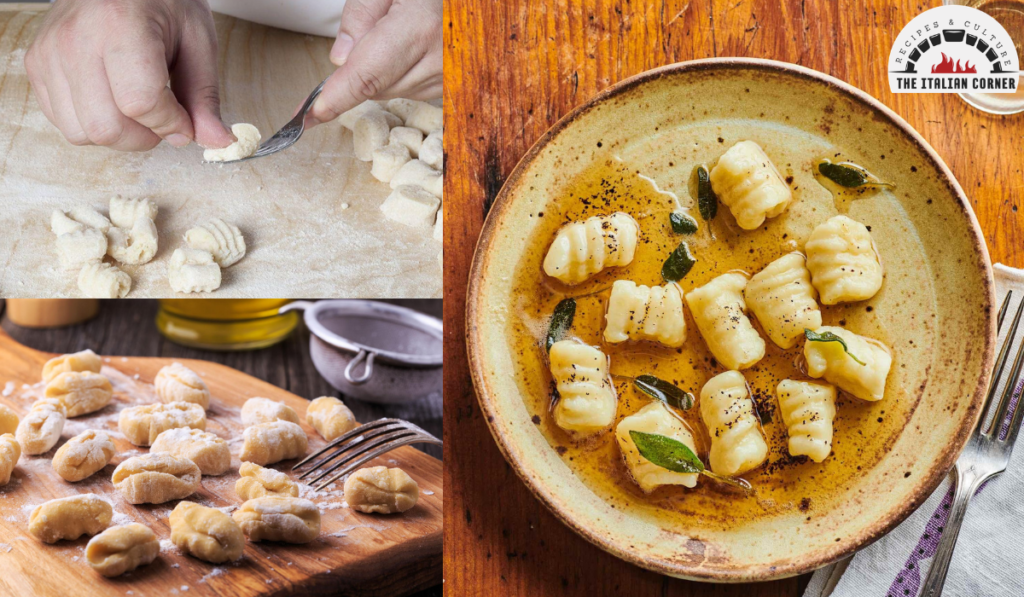
Potato gnocchi with burnt butter and sage
The proving version. Sauce takes four minutes and lets the gnocchi be the point. (Leftover pomodoro from the spaghetti post is the other great match.)
Serves 4 (about 80 gnocchi)
- 1 kg starchy potatoes — Sebago (the everyday dirt-brushed spud at Woolies and Coles) or Desiree both work; skip anything waxy or labelled “salad”
- 1 egg, lightly beaten
- 200–250 g plain flour, plus more for dusting — start at 200 and pray you don’t need the rest
- Fine salt
- 150 g butter
- A big handful of sage leaves
- Grated Parmigiano Reggiano or Grana Padano
Method
- Bake the potatoes at 200°C, whole and unpeeled, straight on the oven rack, 60–75 minutes until completely tender. No foil — foil traps steam, and steam is the enemy.
- While they’re hot (tea towel in one hand, stoicism in the other), halve them, scoop or squeeze the flesh through the ricer onto a large board. Spread it into a wide, thin layer, salt it, and give it five minutes to steam off.
- Drizzle over the egg, scatter over 200 g of flour, and bring it together with a scraper and fingertips — folding and pressing, never kneading — just until it forms a soft, slightly tacky dough. Under a minute. Boil your test piece now.
- Cut the dough into six, and roll each on a lightly floured bench into a rope as thick as your thumb. Cut into 2 cm pillows. Leave them as pillows, or roll each down a fork’s tines for ridges — the ridges hold sauce, but on a busy Sunday the pillows eat just as well, and I’ll say so out loud.
- Line them up on a floured tray, not touching. Cook within the hour, or freeze on the tray then bag.
- Bring a large pot of well-salted water to a gentle boil — a rolling boil batters them. Meanwhile, melt the butter with the sage in a wide pan over medium heat until it foams, the sage crisps, and the milk solids turn hazelnut-brown and smell like toast. Off the heat.
- Drop in the gnocchi in two batches. They’re done about 30 seconds after they float — lift them with a slotted spoon, a little cooking water clinging, straight into the butter. Swirl the pan; the water and butter tighten into a light glaze around each pillow.
- Bowls, parmesan, immediately. Press one between two fingers first, if you like. It should surrender.
Chef’s notes — the honest bits
Your first batch will be heavier than your last. The feel for “enough flour” lives in your hands, not on a scale, and it arrives around batch three. Batch one is still dinner. Mine were bullets for a month, and I was being paid to make them.
Freeze raw, cook from frozen. Frozen gnocchi go straight into the boiling water, no thawing — thawed gnocchi weep and dissolve. They take about a minute longer. This makes gnocchi one of the best batch-cook dinners in existence.
The pan-fry move: boiled gnocchi, drained well, then browned in butter until one side is gold and crisp — chewy-edged, molten-centred, and the version kids fight over. Not traditional. Extremely good.
Don’t make gnocchi with old boiled leftover mash. It’s been wet for a day and usually has milk and butter through it. You’ll chase it with flour and lose. Bake fresh spuds; the oven does the work anyway.
Win the war on water once and gnocchi stops being a project and becomes a habit — a kilo of spuds, an hour, and eighty little pillows that give up the moment you press them.