
Every December on the line, while the pastry section drowned in pavlova orders, we made panforte in secret batches — not for the menu, but for us. Wrapped in baking paper and string, it was the chefs’ Christmas gift to suppliers, to the front of house, to our own families, because it was the one festive thing we could make in November that would still be perfect in January. My first batch set like a paver. Genuinely — we joked about tiling the cool room with it. The sous chef watched me make the second batch, stopped my hand at the stove, and said: “It’s not a cake. It’s confectionery with a cake’s haircut. Watch the syrup, not the clock.”
That’s the entire secret of panforte, and it’s the opposite of everything cake-baking teaches you. Which is why bakers keep wrecking it and lolly-makers nail it first try.
What panforte is
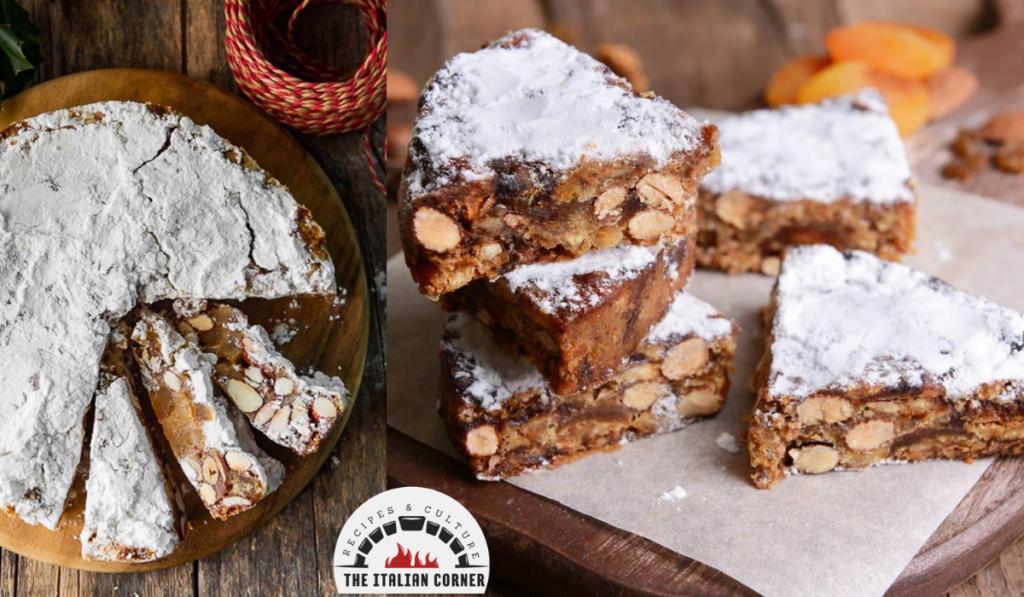
Panforte — “strong bread” — comes from Siena, and it’s genuinely medieval: nuts, candied fruit and flour bound in honey and spices, in the oven since at least the 13th century, when spices were currency and a slab of this was wealth you could eat. It’s dense the way a fruitcake dreams of being: a thin, heavy disc, dark with spice, chewy like the best parts of nougat, cut into slim wedges because a slim wedge is genuinely all you need. It is not a fluffy cake, was never meant to rise, and contains no leavening at all. One bowl, one saucepan, no mixer.
And here’s why it belongs in an Australian December specifically: panforte doesn’t care about heat. Pavlova weeps, trifle collapses, and gingerbread goes soft by Boxing Day — panforte sits on the sideboard through a 40-degree week and improves. Wrapped well, it keeps for months. It posts to relatives without a bruise. It’s the great Australian Christmas food-gift hiding under an Italian name, and almost nobody here makes it.
The technique: watch the syrup, not the clock
Here’s what’s actually happening, and why my first batch could have paved a courtyard.
Panforte isn’t set by baking. The oven’s job is minor — it just warms everything through and marries the flavours. The texture is set by the honey-and-sugar syrup, exactly as it would be in nougat or toffee: the temperature you take the syrup to determines how much water is left in it, and that decides the final chew forever. Pull the syrup too early and the panforte never firms past sticky. Take it too far — which is what I did, wandering off while it bubbled — and you’ve made hard candy with fruit trapped inside it, edible only with intent.
The target is soft-ball stage: 116–118°C. Two ways to know you’re there:
- A thermometer. A $15 sugar thermometer from Kmart or a kitchen shop ends the guesswork permanently, and this dish is the reason to own one.
- The cold-water test, the way it was done for seven centuries: drip a little syrup into a glass of cold water. At soft-ball it gathers into a blob you can squash flat between two fingers. If it strings and dissolves, keep cooking. If it cracks, condolences — start the syrup again (only the syrup; the fruit and nuts are still fine in the bowl).
Two more rules, plainly:
- Have everything ready before the syrup starts. Once it hits temperature, you’re pouring it over the dry ingredients and mixing immediately, because it stiffens as it cools and waits for no one. Tin lined, fruit chopped, spices measured. Sugar work punishes the disorganised — the one law of the pastry section that follows you home.
- Mix with a strong spoon and total commitment. The mixture turns thick as wet cement in about a minute. That’s correct. Push through, get it into the tin, and press it flat with wet hands before it sets its mind.
Panforte
Somewhere between the pale margherita and the cocoa-dark nero — my kitchen’s version, tuned over ten Decembers.
Makes one 20 cm disc — about 16 rich wedges
- 175 g whole almonds, skin on
- 175 g hazelnuts
- 250 g candied citrus — candied orange and a little citron from a deli or Italian grocer if you can; the supermarket tub of mixed peel is the honest fallback, and better than it sounds once it’s swimming in honey and spice
- 100 g dried figs, chopped small (the Aussie upgrade — a nod to every backyard fig tree in the country)
- 100 g plain flour
- 2 tbsp good cocoa
- 2 tsp ground cinnamon, 1 tsp ground coriander, ½ tsp white pepper, ½ tsp nutmeg, ¼ tsp ground cloves — yes, pepper; it’s the “strong” in strong bread, a warmth at the back of the throat, not a bite
- 150 g honey
- 150 g caster sugar
- Rice paper (confectionery sheets, from baking aisles and cake shops) or baking paper, to line
- Icing sugar, a snowfall of it, to finish
Method
- Heat the oven to 150°C. Toast the almonds and hazelnuts on a tray for 10 minutes, until they smell like Christmas Eve. Rub the hazelnuts in a tea towel to shed most of their skins. Leave the oven on.
- Line a 20 cm springform or cake tin with rice paper (traditional — it becomes part of the base and you eat it) or baking paper.
- In your biggest bowl: warm nuts, candied citrus, figs, flour, cocoa and all the spices. Toss until every piece is coated and floury. Spoon at the ready. Tin at your elbow.
- The syrup: honey and sugar in a small saucepan over medium heat, stirring only until the sugar dissolves, then hands off — let it bubble, watching the thermometer, to 116–118°C. It will smell like toffee and childhood.
- Pour the syrup over the bowl and mix hard and fast until every nut is glossed and the mixture is a thick, reluctant mass — under a minute. Scrape it into the tin and press it flat and even with wet fingertips or the back of a wet spoon.
- Bake 30–35 minutes. It will look barely changed and still feel soft — that’s right; remember, the syrup already did the setting, and it firms completely as it cools. The surface should look matte and dry with the faintest spring, like the back of your hand.
- Cool completely in the tin — hours, not minutes — then release, and bury the top in icing sugar. Cut thin wedges with your heaviest knife and a decisive push.
Chef’s notes — the honest bits
It’s supposed to be chewy, dense and slightly stubborn to cut. If your panforte slices like cake, it’s not panforte. If it threatens your dental work, your syrup went past 120°C — see paver, above. The window is small, which is why the thermometer earns its fifteen dollars.
Wrapped in baking paper and foil, it keeps two months easy in the pantry — no fridge, even in summer. This is the entire logistical miracle of the thing: make three in mid-November, and December’s gifts, cheese boards and unexpected guests are all handled.
The gift move: bake it in two 10 cm tins instead, wrap in baking paper, tie with string, write the label by hand. It looks like it cost $40 from a providore and it cost you $12 and an evening.
Serve it thin, with coffee or after dinner alongside a wedge of pecorino or gorgonzola — the honey-and-cheese logic Italians have trusted forever. And it’s outstanding crumbled over the semifreddo from a few posts back, which is exactly how our staff Christmas lunch ended more than once.
Confectionery with a cake’s haircut. Watch the syrup, not the clock, and seven hundred years of Siena comes out of a Kmart tin.