There was a bloke on my first brigade — a Calabrian, forearms like bollards — who ate the same staff meal every single day for two years: penne all’arrabbiata. His arrabbiata. Nobody else was allowed to make it. When he finally showed me why his tasted angrier and brighter than mine, the whole lesson took one sentence: the chilli goes in the oil, not the sauce. I’ve cooked penne a thousand ways since, and that one sentence still does more work than anything else in this article.
Penne gets treated like the beige cardigan of pasta — the shape you buy without thinking, boil without caring, and drown in whatever’s around. It deserves better. Used properly, it’s one of the most intelligent shapes Italy ever extruded.
Why penne is built the way it is
Look at one. Every design choice is doing a job. The tube pulls sauce inside, so each piece arrives loaded — a delivery system, not just a surface. The angled ends (penne means “quills,” cut like the nib of a fountain pen) scoop as you stir instead of pushing sauce away. And the ridges — that’s the choice that matters at the supermarket. Penne rigate (ridged) grips sauce along every groove. Penne lisce (smooth) lets it slide straight off. Buy rigate. In Australia that’s rarely a dilemma — nearly everything on the Woolies and Coles shelf is rigate — but check the packet, because lisce still ambushes people at a certain price point. There’s a reason even most Italians have taken sides, and the ridges won.
Because of that architecture, penne wants sauces with body: arrabbiata, a proper napoletana, sausage and cream, baked with mozzarella until the top corners catch. What it doesn’t want is the slick, emulsified minimalists — cacio e pepe and carbonara belong on long pasta, where the sauce can wind and cling. Right shape, right sauce. It’s half of Italian cooking.
The technique: chilli blooms in fat, not water
Here’s what’s actually happening in my Calabrian mate’s pan, and why his arrabbiata bit harder than mine ever had.
Capsaicin — the heat in chilli — is fat-soluble, barely water-soluble. The aromatic compounds in garlic behave the same way. Toss chilli into a watery tomato sauce and most of its character stays locked inside the flakes; you get vague warmth and no voice. Start the chilli and garlic in olive oil over gentle heat, and the fat pulls the heat and perfume out and carries them into every corner of the dish. Same ingredients, entirely different result. As a home cook I used to shake chilli flakes over the finished bowl and wonder why it tasted like an afterthought. It was an afterthought. Bloom it in the oil at the start and the heat is in the sauce, not on it.
Two more rules, stated plainly:
- Cook the penne two minutes short and finish it in the sauce. The tubes drink in sauce as they finish, and the starchy pasta water you add with them tightens everything into a coating instead of a puddle. This is the same pan-finish that runs through every pasta I write about, and it matters even more with tubes — you want sauce inside them.
- Salt the pasta water like the sea. Around a tablespoon per litre. Penne is thick-walled; underseasoned penne tastes underseasoned all the way through, and no sauce rescues it.
Penne all’arrabbiata — the proving dish
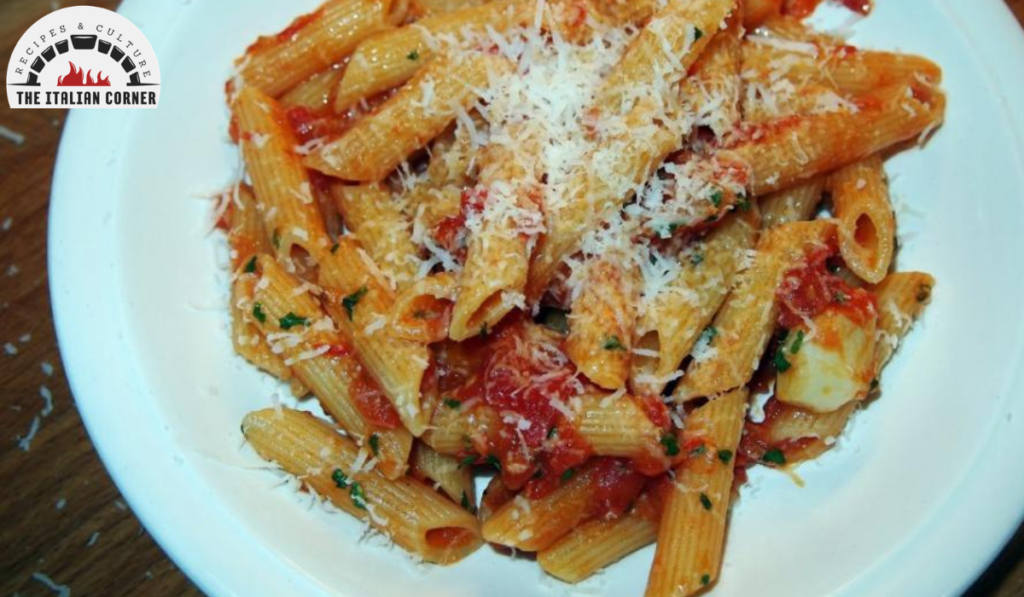
Arrabbiata means “angry.” It’s a Roman sauce of tomato, garlic, chilli and oil — nothing else, no onion, no herbs beyond a little parsley if you insist — and it takes barely longer than the pasta. Cheap, fast, and completely exposed: if your technique is off, arrabbiata tells everyone.
Serves 4
- 400 g penne rigate (San Remo or Barilla do the job; De Cecco or Rummo from a deli or good IGA if you’re spending)
- 2 × 400 g tins whole peeled tomatoes (Mutti or Annalisa), crushed by hand
- 80 ml olive oil
- 4 garlic cloves, sliced thin
- 1–2 tsp dried chilli flakes, to your nerve — or 2 fresh long red chillies, sliced
- Salt
- Chopped flat-leaf parsley, optional
- Grated pecorino, to serve — Romans argue about cheese on arrabbiata; I’m pro. Pick your side.
Method
- Put the oil, garlic and chilli in a cold, wide frypan, then set it over medium-low heat. Starting cold gives the fat time to pull the flavour out before anything scorches. Let it sizzle gently until the garlic is pale gold and your eyes prickle a little when you lean over the pan — about three minutes. That prickle is the capsaicin in the air. It’s working.
- Add the crushed tomatoes and a good pinch of salt — carefully, it will spit like a cat. Simmer briskly for 15 minutes, until the sauce darkens a shade and thickens enough to hold a trail behind a spoon.
- Meanwhile, boil the penne in well-salted water for two minutes less than the packet says. Firm centre. Not done. Correct.
- Save a mug of pasta water, then drain the penne and tip it into the sauce with a splash of that water.
- The last two minutes: toss and stir over medium heat until the sauce clings to the ridges and starts riding up inside the tubes, adding pasta water a splash at a time if it tightens. Done means every quill is coated and the pan is nearly clean behind your spoon.
- Off the heat, parsley if using, into warm bowls, pecorino over the top if you’ve picked my side of the argument.
Chef’s notes — the honest bits
Gauge your chilli before committing. Dried flakes vary wildly — one brand’s teaspoon is another’s dare. Bloom the oil, dip a piece of bread in it, taste. Adjust before the tomatoes go in, because afterwards it’s too late.
If you scorch the garlic, start over. Thirty seconds of inattention makes the whole dish bitter, and it costs one clove and a splash of oil to restart versus a full pan of sauce to regret. I’ve restarted plenty. Cheaper than pride.
Leftover arrabbiata is a gift. The sauce keeps a week in the fridge and gets rounder as the chilli settles in. It’s also the best base for baked penne — stir through cubed mozzarella, top with more, bake at 200°C until the corners catch and crisp. The crunchy edge pieces are the cook’s tax. Collect it.
Penne holds better than long pasta. Feeding people in shifts, or a kid who eats an hour after everyone else? Penne dressed in sauce survives sitting and reheating far better than spaghetti. It’s the family-dinner shape for a reason.
Get the bloom and the pan-finish into your hands with arrabbiata, and every tube-pasta dish after it — napoletana, sausage ragù, the baked ones — is the same movement with different passengers.